

 WhatsApp
 WeChat

Location:Service > Technical Articles
Technical Articles
Must-Read for Researchers! A Complete Guide to Choosing the Right Ball Mill Jar Material
In ball milling experiments, the choice of ball mill jar material is critical, as it directly affects grinding efficiency, contamination, durability, and compatibility with specific materials.
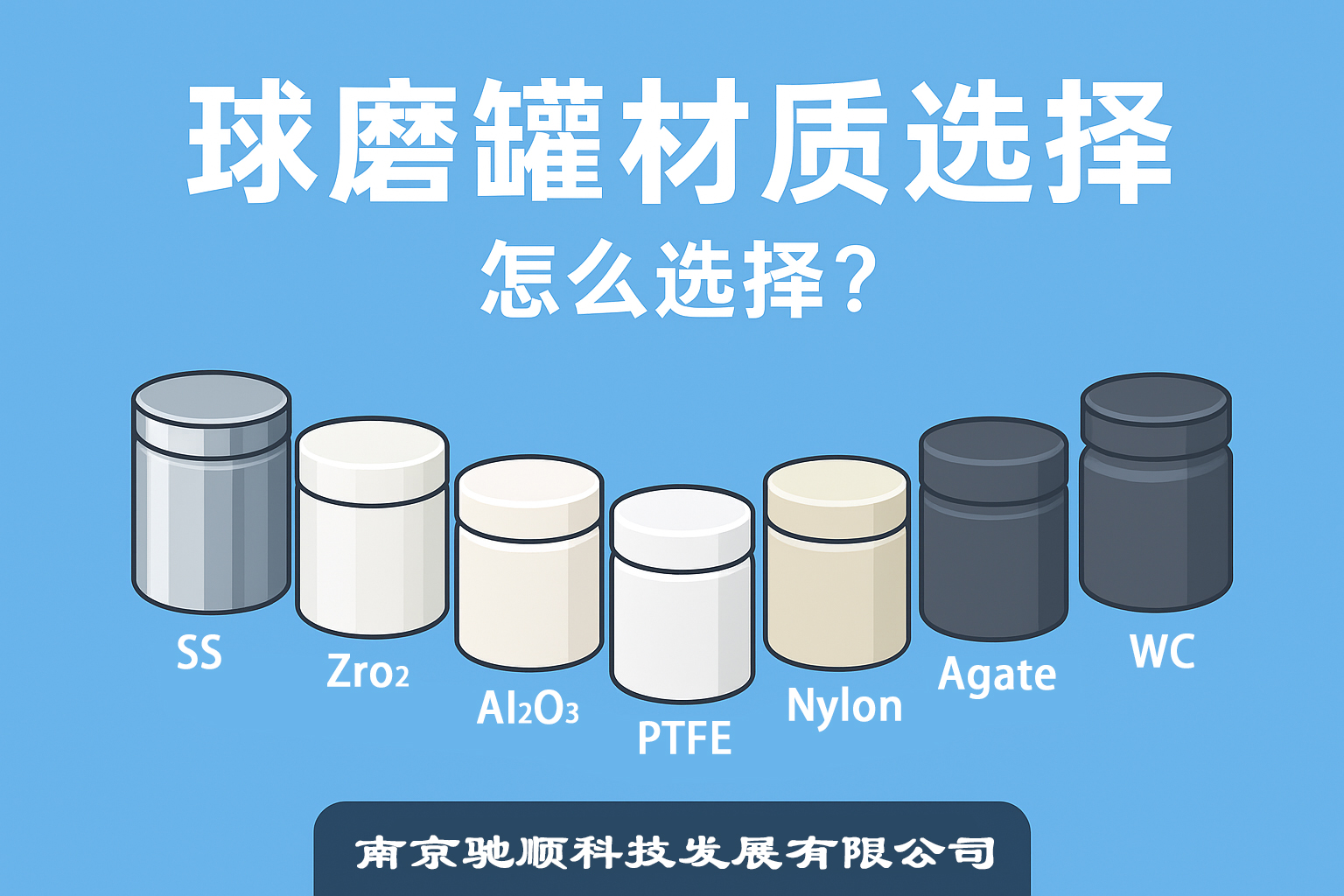
* Sample hardness and brittleness
* Whether metal or oxide contamination is acceptable
* Required grinding energy (high-energy milling or conventional milling)
* Cost and service life
1. Stainless Steel Jars
Advantages:
* High mechanical strength and good wear resistance
* Moderate cost
* Suitable for grinding most metal powders
Disadvantages:
* May introduce Fe/Cr/Ni contamination
* Not ideal for highly pure inorganic non-metallic or ceramic materials
Applications:
* Metal powders
* Certain alloys
* Materials that are not highly sensitive to iron contamination
2. Agate Jars
Advantages:
* High hardness (Mohs hardness ≈ 7)
* High purity
* Very low risk of metallic contamination
Disadvantages:
* Brittle and susceptible to cracking or chipping
* Not suitable for prolonged high-energy milling
* Relatively expensive
Applications:
* Non-metallic minerals
* Ceramic powders
* Inorganic materials requiring low contamination
3. Zirconia (ZrO₂) Jars
Advantages:
* High hardness and excellent wear resistance
* Excellent chemical stability
* Extremely low risk of metallic contamination
* Particularly suitable for high-purity and contamination-sensitive applications
Disadvantages:
* Higher cost
* Relatively high density, which increases the load on the milling equipment
Applications:
* Nanomaterial preparation requiring ultra-low contamination
* Electronic ceramics
* Functional ceramics
* Solid-state electrolyte materials
4. Alumina (Al₂O₃) Jars
Advantages:
* Good wear resistance
* Excellent high-temperature resistance
* Lower cost than zirconia
Disadvantages:
* Relatively poor impact resistance
* Lower mechanical toughness than zirconia
Applications:
* Ceramics
* Mineral powders
* Applications requiring contamination control with a limited budget
5. PTFE (Polytetrafluoroethylene / Teflon) Jars
Advantages:
* Excellent chemical stability
* Excellent resistance to acids and alkalis
* Lightweight
* Relatively low hardness
* Poor wear resistance
* Not suitable for high-hardness materials
Applications:
* Organic materials
* Strong acid/alkali systems
* Special samples where metal contamination must be avoided
6. Nylon Jars
Advantages:
* Low cost
* Lightweight
* Suitable for soft to medium-hardness materials
Disadvantages:
* Relatively poor wear resistance
* May introduce organic/polymer contamination
Applications:
* Soft materials
* Preliminary screening and high-throughput grinding tests
7. Tungsten Carbide (WC) Jars
Advantages:
* Extremely hard
* Excellent wear resistance
* Suitable for high-hardness materials
Disadvantages:
* May introduce W and Co contamination
* High cost
Applications:
* High-hardness metals
* Ores
* Carbides
* Other extremely hard materials
Quick Selection Guide
* High-hardness materials → Tungsten carbide / Zirconia
* Low-contamination requirements → Agate / Zirconia / Alumina
* Organic or corrosive materials → PTFE / Nylon
* Metal powders → Stainless steel / Tungsten carbide
Tip: The best jar material is not simply the hardest one. It should be selected based on the sample composition, hardness, required purity, chemical environment, grinding energy, and acceptable contamination level.
 Email: chishun@126.com
 Phone: +86 139 1299 5166
 Address: No.1,Qianjin Road, Jiangning District, Nanjing